An Introduction to Heisey’s Advertising to the Public—Appendix
The following article is an appendix to the four-part series entitled An Introduction to Heisey’s Advertising to the Public. This appendix covers Heisey’s outdoor advertising. The bulk of Heisey advertising was in the form of printed materials. However, Heisey did employ radio and outdoor advertising in a limited manner.
Radio ads ranging from the late 1920s to the 1940s are discussed in articles written by Micki Wareham in the March 2010 issue of Heisey News and by Michael Maher in the August 2015 and January 2016 issues. You can hear some of these radio ads, recreated from surviving scripts, playing in the Heisey Museum thanks to the efforts of Michael and others. Past issues of Heisey News are available on the Heisey Museum website.
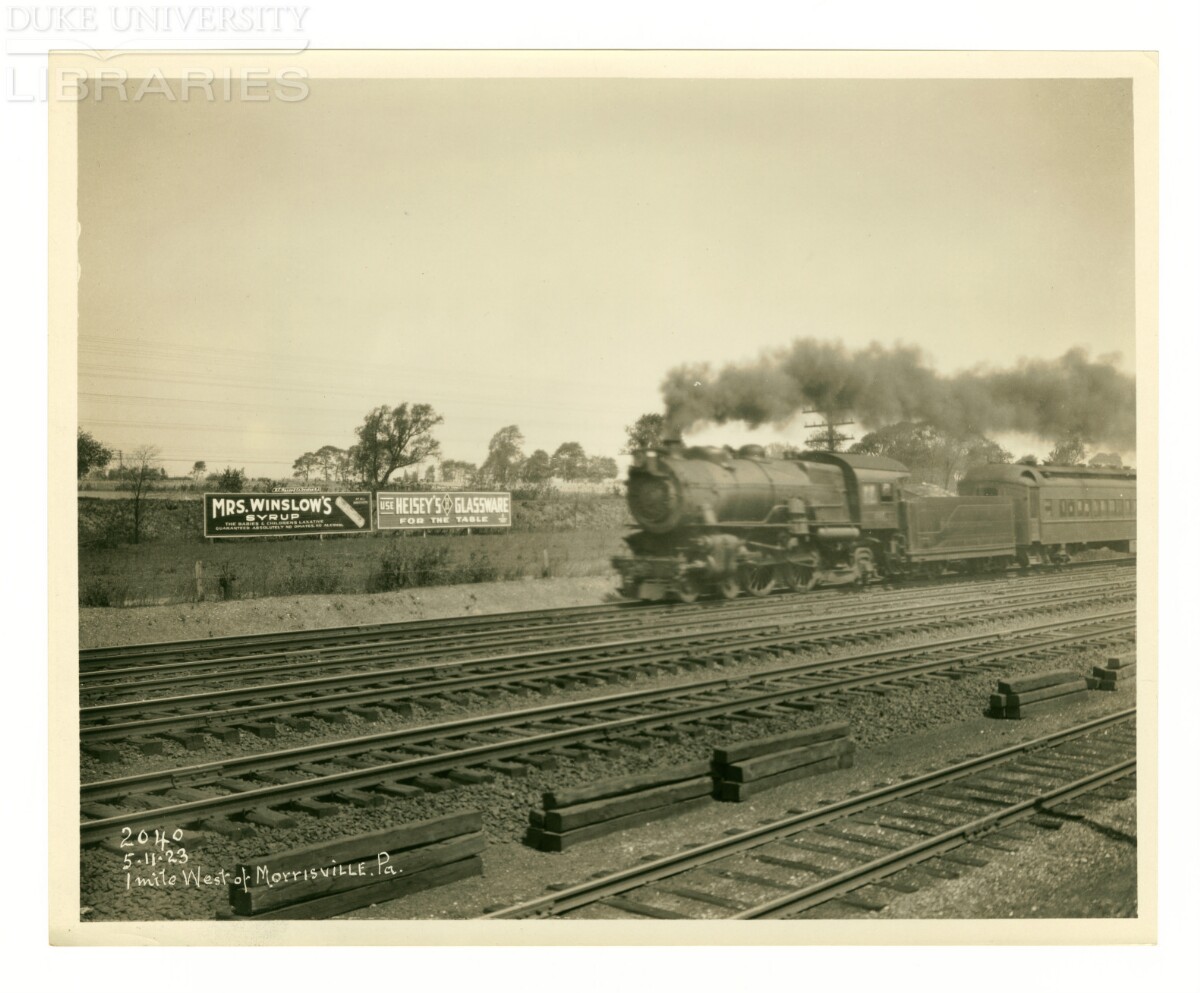
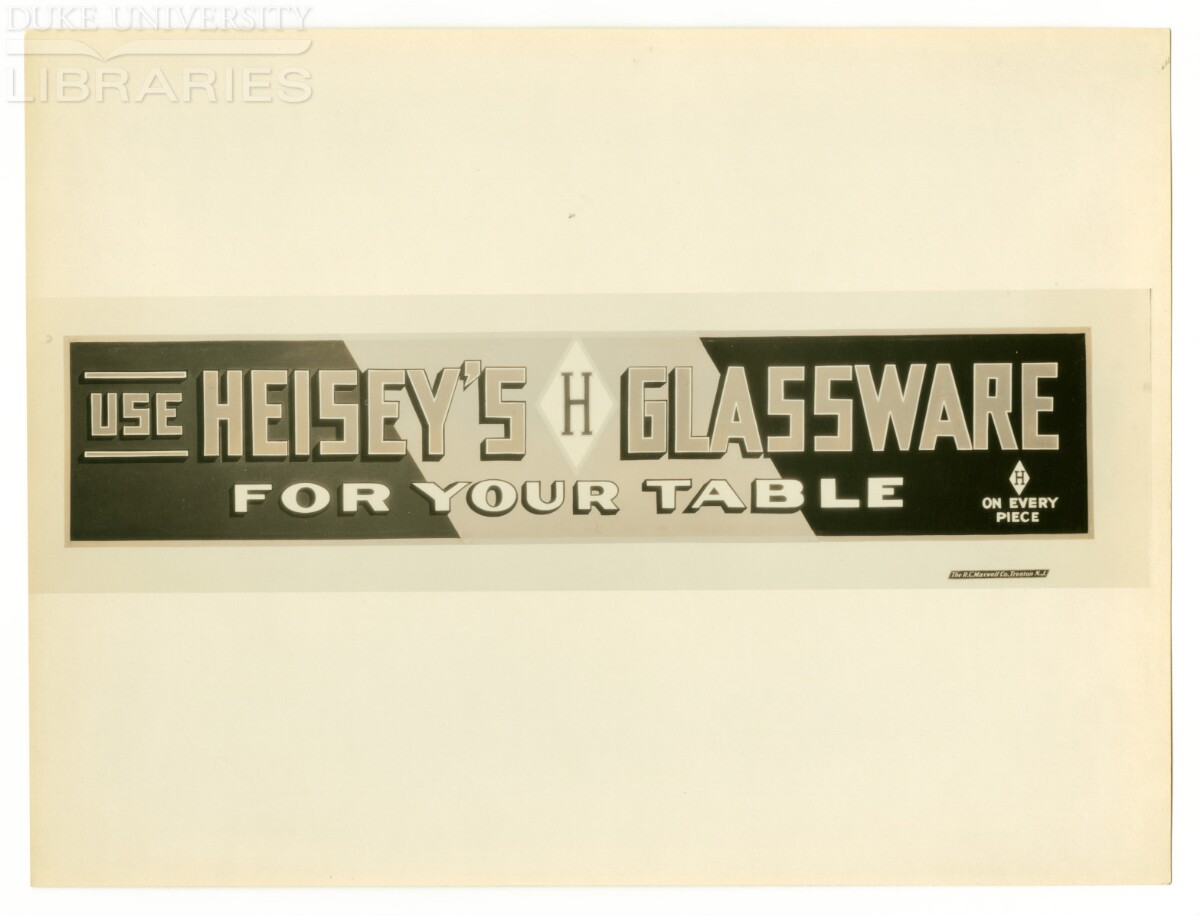
Heisey contracted with R.C. Maxwell Company of Trenton, New Jersey, the earliest outdoor advertising company in the United States, for its outdoor advertising needs. As mentioned in an article in the November 1995 issue of Heisey News, two contracts from 1921 and 1923 survive in the archives. Each contract specified sites for 100 billboards along railroad lines between Buffalo, New York, and Boston, Massachusetts, down through Philadelphia, Pennsylvania, to Atlantic City, New Jersey, to be maintained for $81 per year each.
This large commitment to railroad advertising must have begun earlier since it was mentioned in the October 23, 1913, issue of Printer’s Ink. In discussing Heisey print advertising that drew the attention of the reader to the Diamond H hallmark on the glass, it is stated that the ad “links up well with the new Heisey painted signs along the railroads of the country.”
The following images are from the Duke University Library collection which contains many more Heisey images.
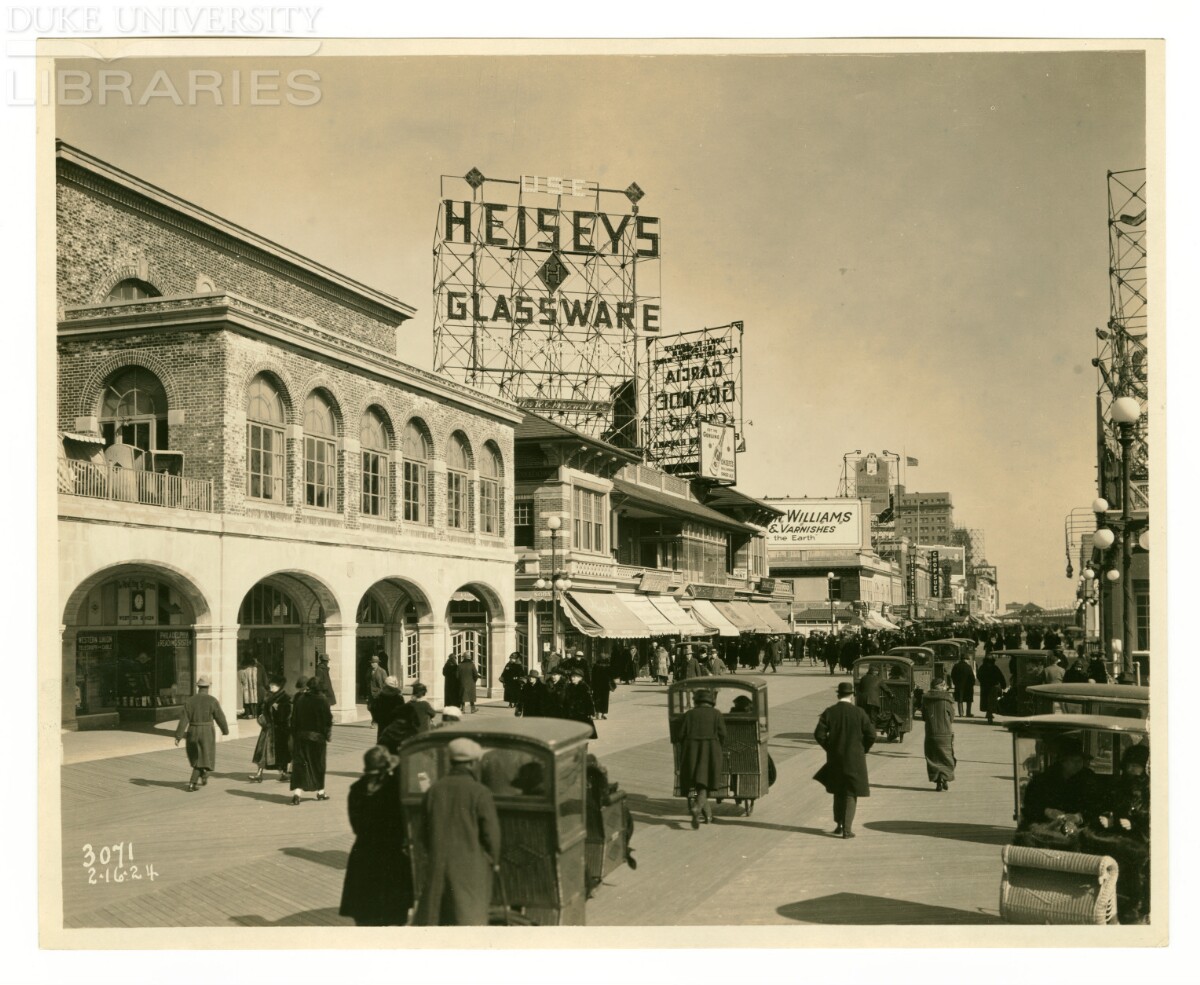
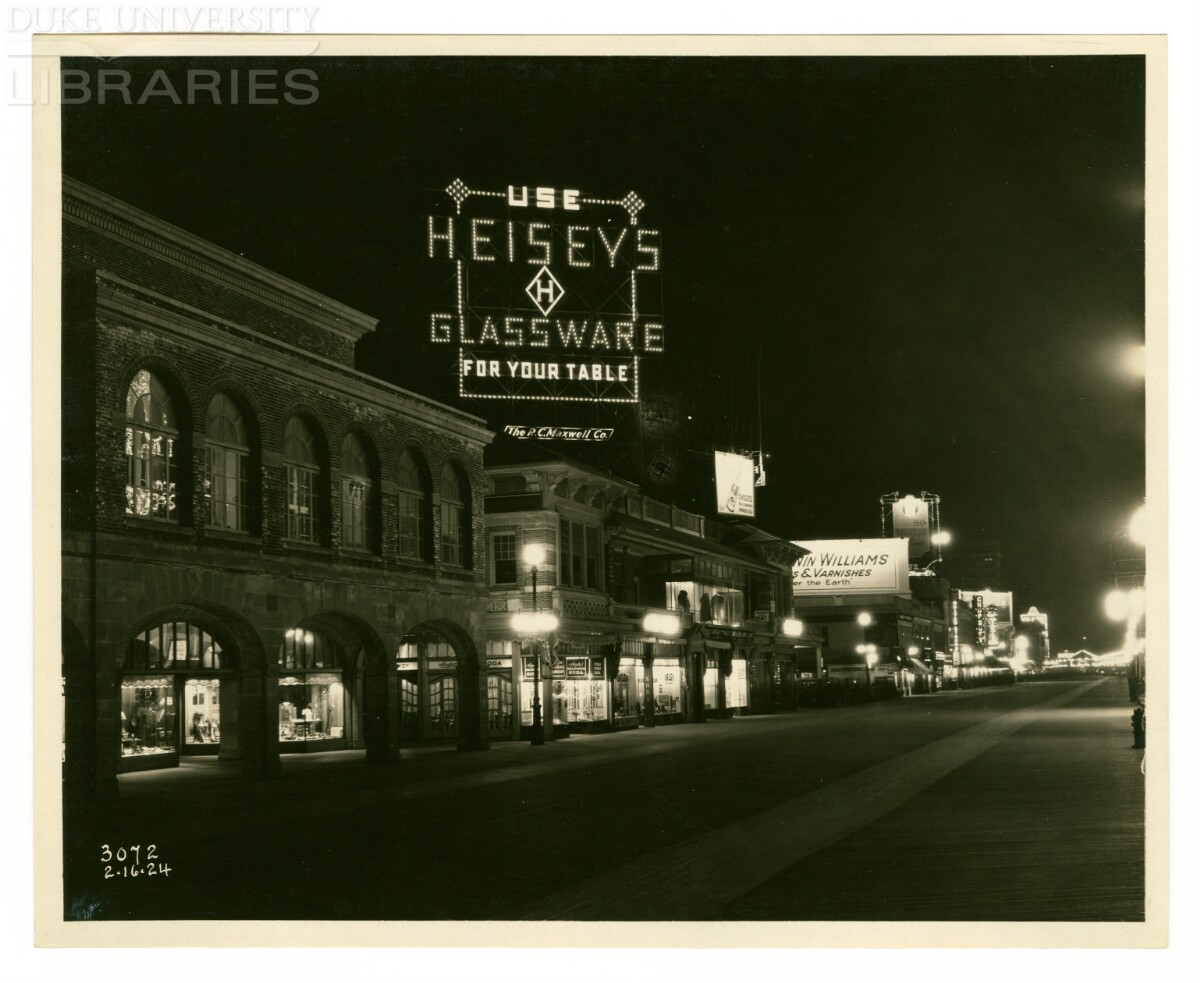
The other well known Heisey outdoor advertising sign by R.C. Maxwell Company is the one on the Atlantic City Boardwalk dating from the early 1920s. An article by Vicki Meehan that appeared in the June 2002 issue of Heisey News, states:
…the archives contain letters and a contract between the Heisey Company and the R. C. Maxwell Company, dated 1927 and 1928. Heisey was still advertising in Atlantic City. At the time, they were using a 30’ x 42’ sign lit with “15 watt blue daylight type” lamps in the lettering and trademark. The contract states that the signs would be illuminated every night from dusk until midnight and would continue until March 30, 1929. The agreed price for one “Heisey Glassware Spectacular Flashing Electric Sign” facing east, at the corner of Mississippi Avenue and Boardwalk, was $7,250.00.