
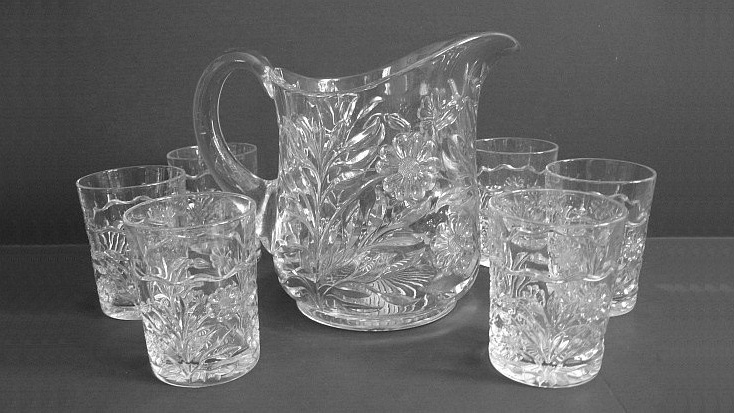
Fig. 1. No. 427 Daisy and Leaves half gallon jug and tumblers
Many glass companies, both before and after A. H. Heisey & Company, turned to the natural world for inspiration for their designs. In the late 19th and early 20th centuries, makers of pressed glass often used floral and other botanical motifs in their patterns. Heisey’s early patterns did not include these types of elements, but in around 1910, Heisey introduced several pressed designs that featured botanical motifs. Some of them were not in production for a long enough time to appear in one of the company’s catalogs, but some of their original Heisey pattern numbers have been discovered recently. The items whose original numbers are not known are identified by the pattern numbers and names assigned to them by HCA or Heisey researcher Clarence Vogel. However, they can be definitely identified as Heisey products, because they are marked with the Diamond H. All are known in Crystal only. This article will focus on these pressed botanical designs.
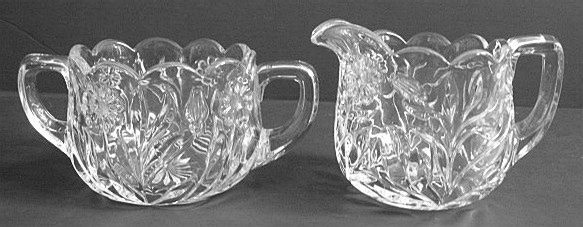
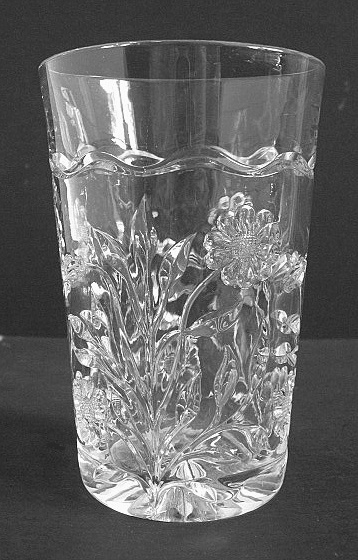
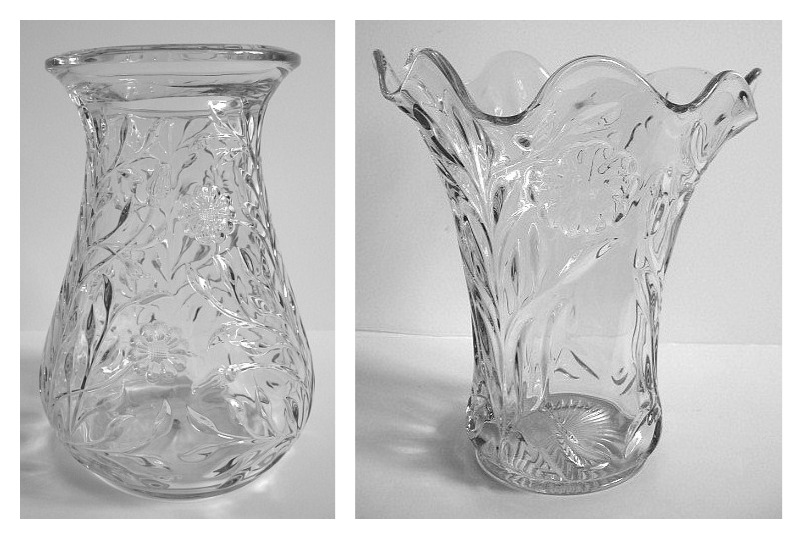
One pressed botanical pattern, the No. 427 line, called “Daisy and Leaves” by collectors, appeared in one Heisey price list, from 1910, and in one catalog, from 1911. Its production period is estimated to be from about 1909 to 1912. The shapes of the items in the pattern are similar to those of the Colonial style glassware being made at that time by Heisey, but instead of the panels and flutes of Colonial glassware, the No. 427 line has a pressed design of flowers, buds, and leaves. The flowers and buds are sometimes found with a satin finish. The pattern was made in Crystal only, and all items are marked with the Diamond H. The pattern included three sizes of nappies, three sizes of shallow nappies, a finger bowl, a tumbler, an iced tea tumbler, two half gallon jugs, a hotel cream and sugar, a 9″ vase, and swung vases in sizes from 7½ ” to 48″ (Fig. 1-6). The swung vases are numbered from 50-440 to 59-440, based on their height.
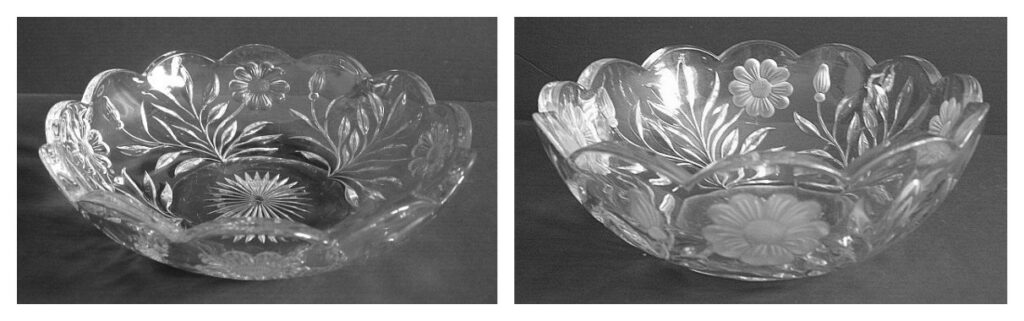
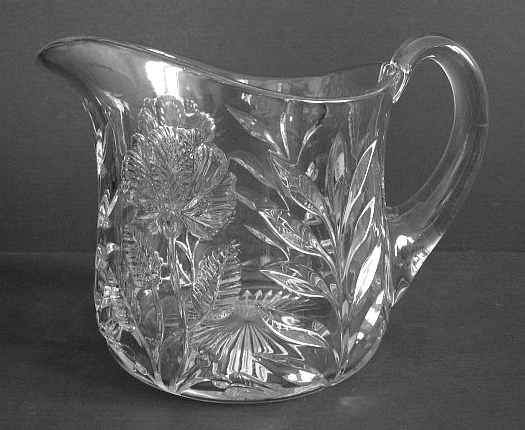
One of the two half gallon jugs mentioned above was recently identified as the jug shown in Figure 7. Despite featuring a floral motif different from other items in the Daisy and Leaves line, it was assigned the number 427½. HCA previously gave it the number 8019 and named it “Oriental Poppy,” a more accurate description of the flower that appears in the pattern. Researcher Clarence Vogel gave it the number 7061 and named it “Iris”or “Leaf and Iris.”
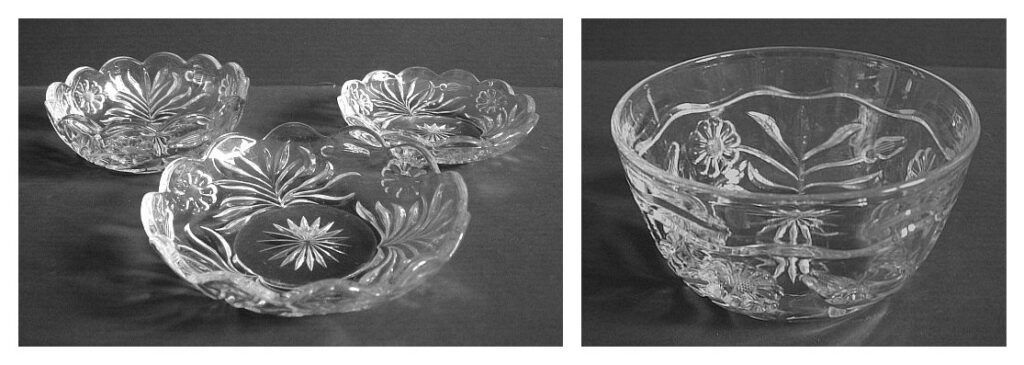
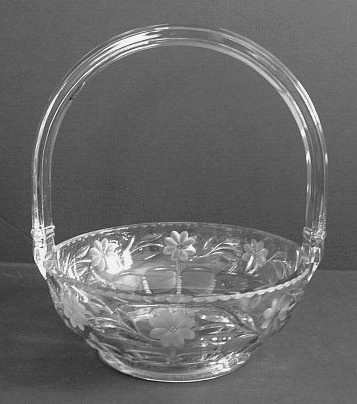
From 1916 to 1923, Heisey made the No. 480 fruit or centerpiece basket with a pressed pattern similar to No. 427 Daisy and Leaves, but lacking the buds (Fig. 8). The basket is often found with over-cutting on the pressed floral design. Several other items are now known to have been part of the No. 480 line. These include the eight-inch plate shown in Figure 9, previously known as No. 7098 Cut Daisy because of the sharpness of its pressed floral design. Previously known as No. 7011 Daffodil, the 5½” nappy shown in Figure 9 is also part of the No. 480 line. Each panel has a different floral design. Similar nappies with a scalloped rim were assigned the number 482 and named Scalloped Daisy and Leaves. The scalloped rim nappy is shown in Vogel, book 4, page 64 (volume 2, page 117 in the new edition).
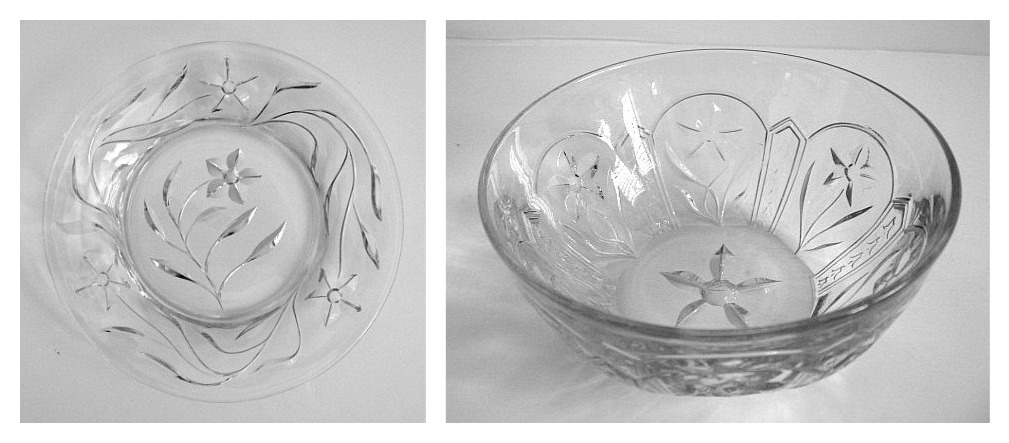
(previously known as No. 7011 Daffodil) (right)
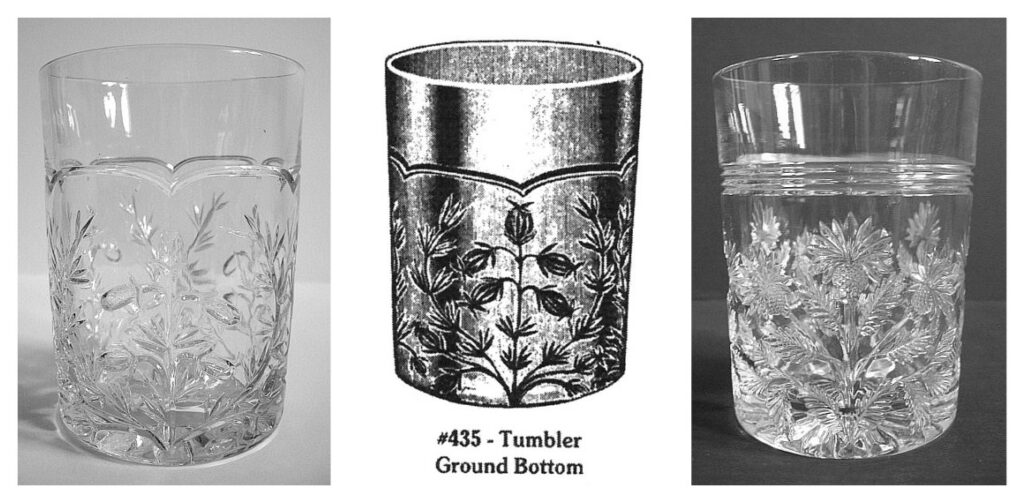
Because the No. 435 Juniper tumbler (Fig. 10) appeared in one Heisey catalog (circa 1910), its original Heisey pattern number is known (it was named by HCA). There may be two versions of this tumbler. In the catalog drawing, there are fronds on the berries that do not appear on the tumbler in the photo (Fig. 10). It is also possible the drawing is not accurate. The No. 182 Thistle tumbler (Fig. 10) was previously given the number 8003 by HCA. Only a few examples are known.
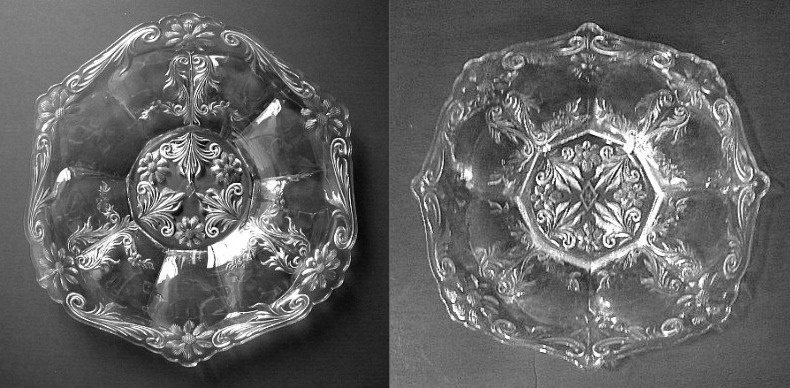
Two remarkably similar, and confusing, items appear in Figure 11. The plate on the left is No. 7099 Three Scroll. It is six-sided and has three repeats of the floral design. The plate on the right is No. 8007 Daisy Scroll. It is eight-sided and has four repeats of the design. Plates and nappies were made in both patterns. The original Heisey numbers for these items have not yet been discovered.
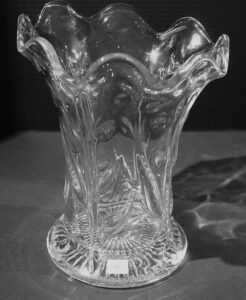
The No. 453 Pussy Willow vase (Fig. 12) is a swung vase in a form similar to the No. 427 Daisy and Leaves swung vase shown in Figure 6. It was previously known as No. 7121 Pussy Willow, No. 7126 Pussy Willow, and No. 7164 Falling Drops.
Researchers have suggested that the Daisy and Leaves pattern, and similar pressed floral designs, were intended to imitate the floral cuttings and engravings of the period and compete with McKee’s Rock Crystal and Puritan lines, and the pressed floral and botanical designs offered by Cambridge (in its Nearcut line) and Fostoria. The short production period of Daisy and Leaves and the scarcity of items with similar pressed designs indicate Heisey’s effort to compete with other glass companies’ pressed botanical designs was not particularly successful.
Author’s Note: This article is an updated version of an article that appeared in the February 2023 Heisey News. Thanks to Eric Tankesley-Clarke, who provided the original Heisey numbers and additional information for several of these elusive patterns and items.
Click on the link below to download or print this article: