
Heisey’s Glass Menagerie
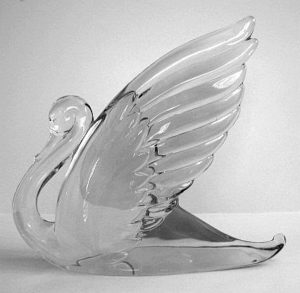
Today they are collectors’ favorites, but in the 1940s and ’50s, Heisey’s animal figurines helped the company weather the challenging years of World War II and the postwar era.
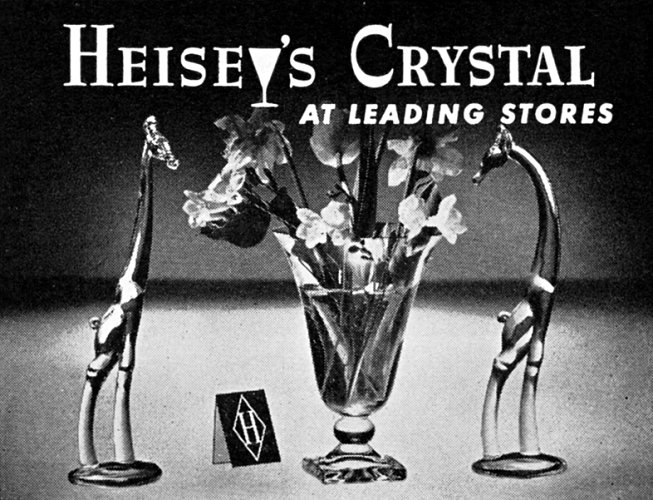
Many of the figurines were designed by the noted designer Royal Hickman, whose designs seem to capture the creatures’ personalities. Heisey’s sparkling clear Crystal glass gave the animal figurines a visual appeal that was attractive to the buying public. To boost sales, Heisey’s advertisements often featured decorative arrangements of the figurines paired with other items such as vases, floral bowls, or candlesticks.
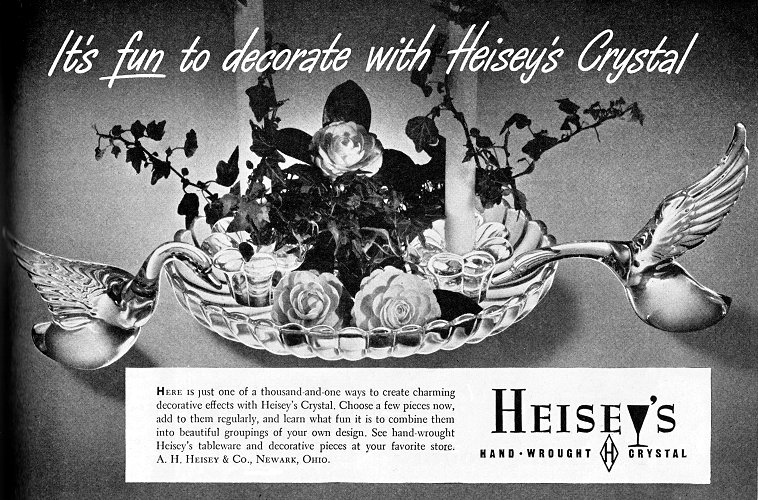
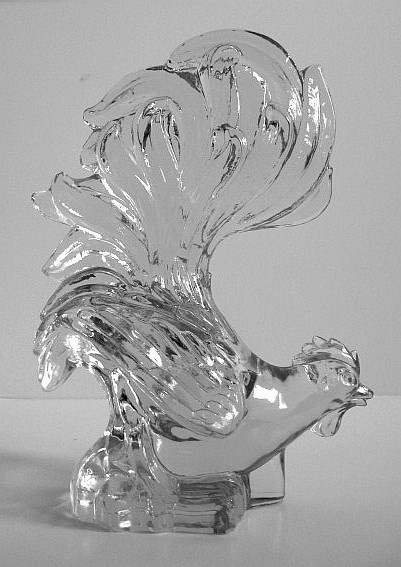
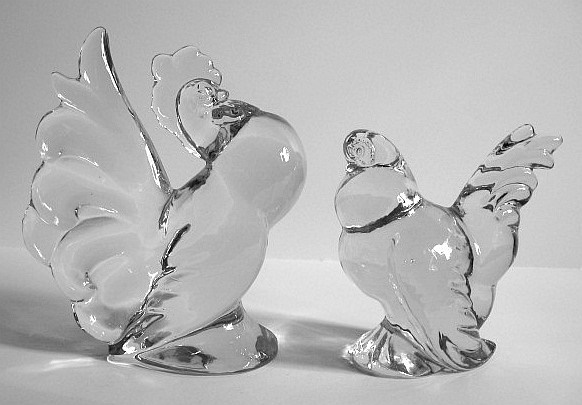
Heisey’s animal figurines included creatures from all corners of the animal kingdom. The first bird figurine was the Chanticleer, known to collectors as the “Fighting Rooster,” introduced in 1940. It was followed by 19 more: three Geese (wings down, wings half, and wings up), two Pheasants, Ringneck and Asiatic, a Sparrow, a Swan and a Cygnet, three Mallards (wings down, wings half, and wings up), a Mother Wood Duck and her two Ducklings (resting and walking), a puffed-up Pouter Pigeon, and a Chicken Family consisting of a Rooster, a Hen, and two Chicks (head up and head down).
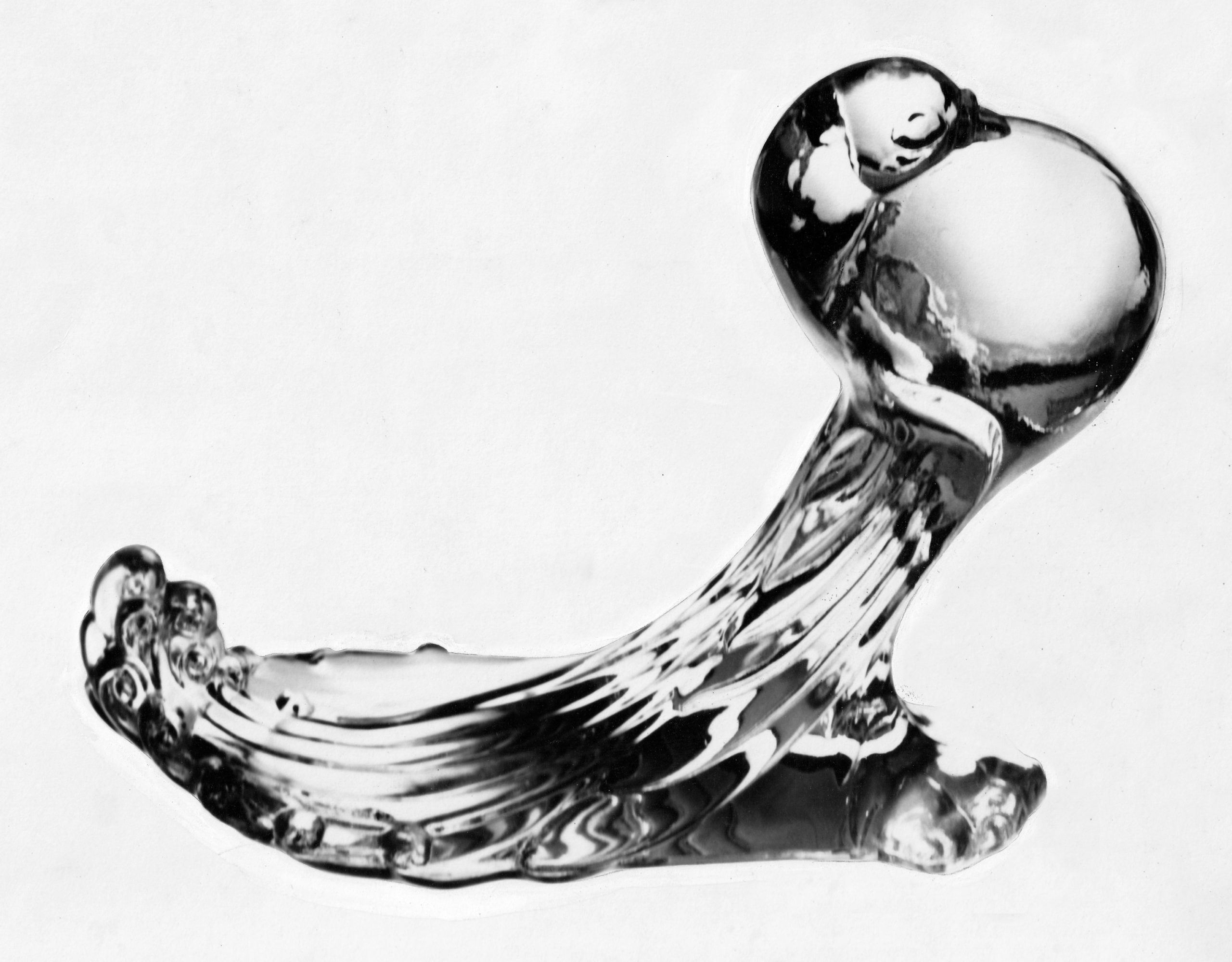
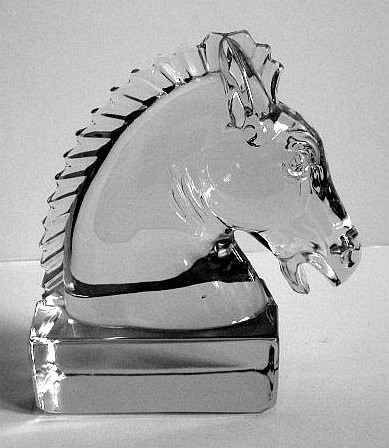
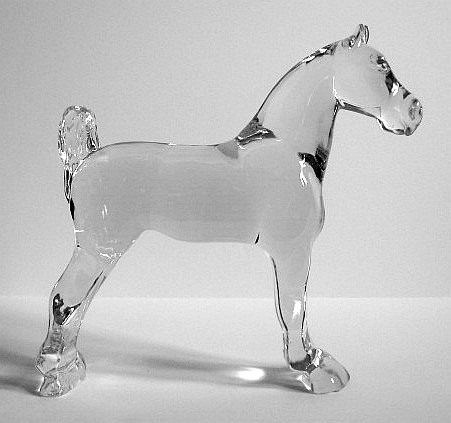
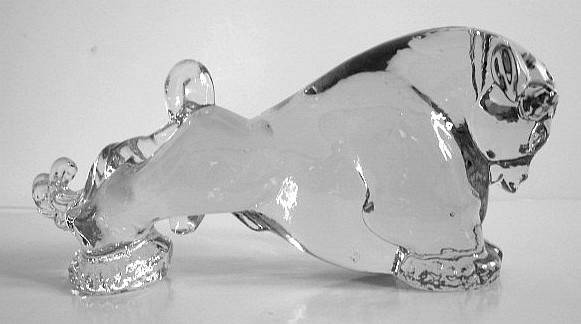
Several members of the Heisey family were avid equestrians, so it is no surprise that the company produced 12 figurines of horses. One of them, the Show Horse, depicts T. Clarence Heisey’s horse, Goodness Gracious. The first horse figurine was the Horse Head bookend (introduced in 1937), followed by the three Ponies (Standing, Kicking, and Balking), Oscar the plug horse (also affectionately called “Sparky”), the Clydesdale, the toy Horse Head, the Show Horse, the Rearing Horse bookend, two Fillies (head forward and head turned), and the Flying Mare. The Oscar figurine was reissued in many colors for HCA and was a popular souvenir of the HCA convention for almost 20 years.
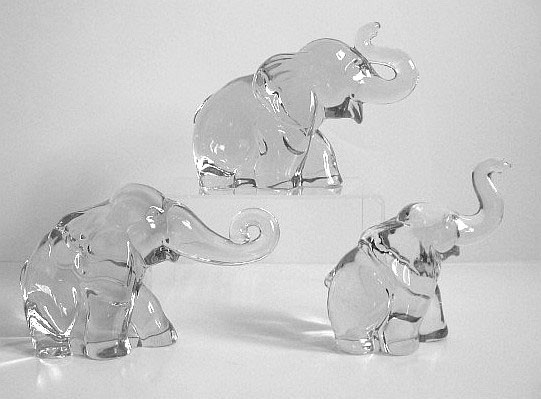
Heisey’s assortment of animal figurines also included several inhabitants of the African savanna: two Giraffes (head straight and head turned), three Elephants (small, middle and large), a Gazelle figurine, a Gazelle bookend (called “Doe Head” by collectors), and a Tiger paperweight.
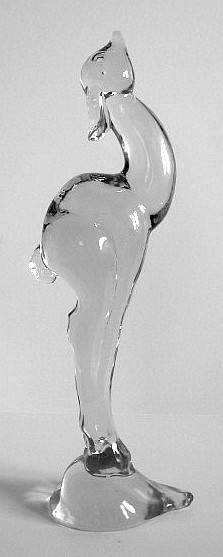
Farm animals were not left out of Heisey’s offerings of figurines. They included a Rabbit paperweight, a Mother Rabbit and her two Bunnies (head up and head down), the Chicken family, a Sow and her two Piglets (walking and resting), a Donkey, and a Bull.
Two breeds of dogs were also among Heisey’s figurines, a Scottie and an Airedale.
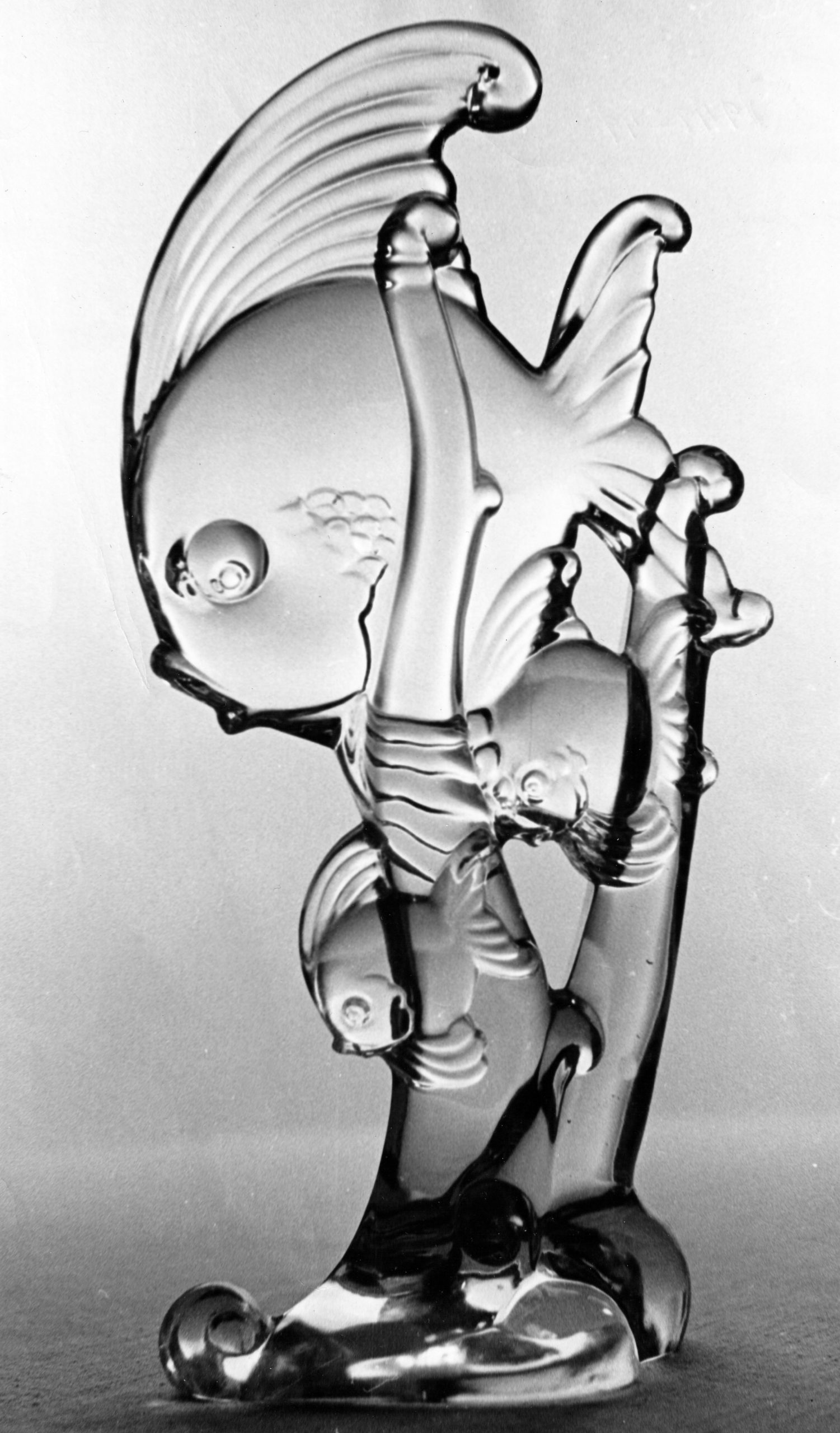
Sea creatures were not new to Heisey; the company had previously produced dolphin candlesticks, the dolphin-foot items in the No. 1401 Empress line, and items with a seahorse motif in No. 1519 Waverly (originally called “Oceanic” by the company). In 1941, the company introduced the No. 1550 Dolphin bowl; matching candlesticks and a match holder were later added to the line. While these functional items are not only decorative, they have their place in a collection of Heisey animals. Other inhabitants of the deep included the Tropical Fish and the Fish bookend.
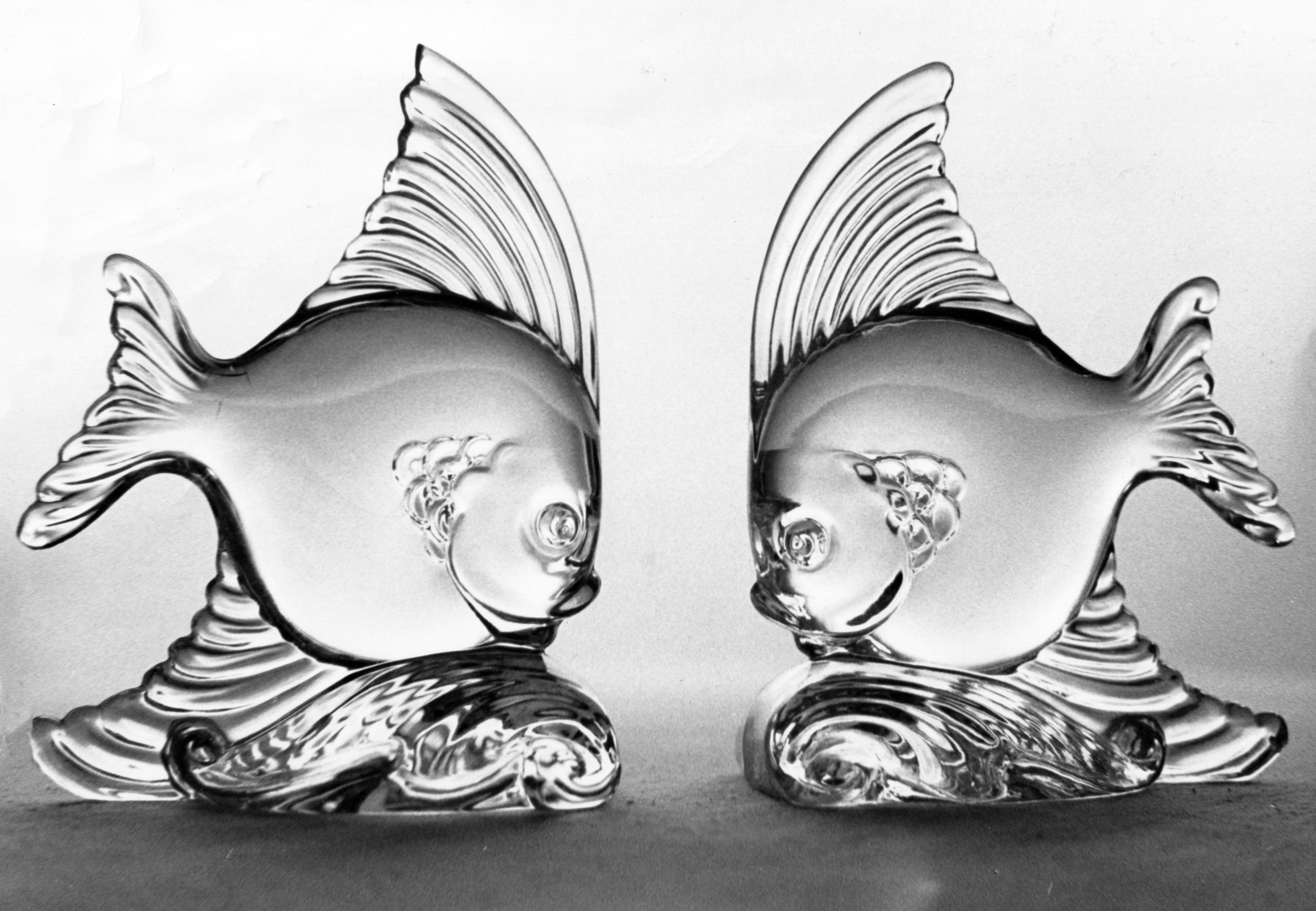
Most of Heisey’s animal figurines were made in Crystal only. The Ponies, Oscar, and the Clydesdale were made in a light shade of Amber called “Honey Amber” by collectors. The Flying Mare, the Horse Head bookend, the Rooster, the Giraffes, and the three Elephants were made in a darker shade of amber called “Sultana” by Heisey. The three Ponies and Oscar were also made in Stiegel Blue (Cobalt).
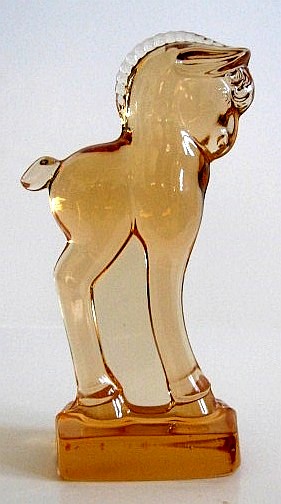
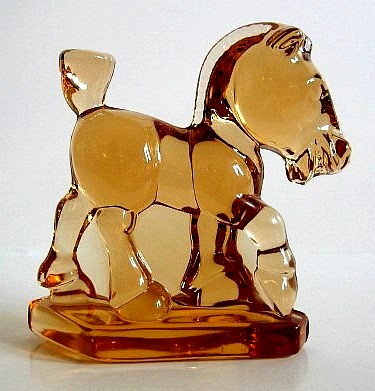
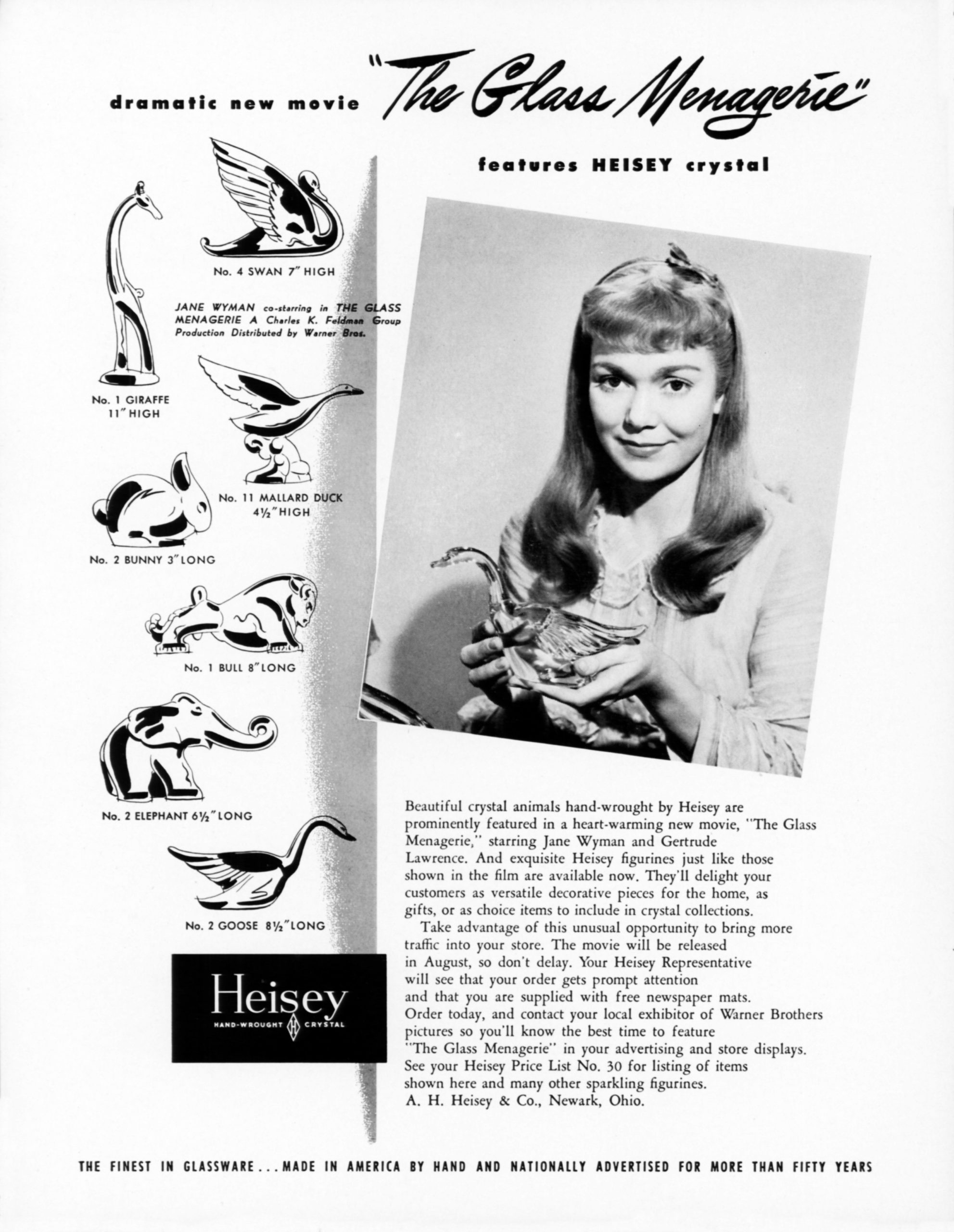
Heisey introduced its animal figurines throughout the 1940s, from 1941 to 1948. Production of some of them continued into the 1950s. In 1950, sales of the Heisey animals received a boost when they were featured in the Broadway production and, later, the film of “The Glass Menagerie,” by Tennessee Williams.
After Heisey closed its doors in 1957, the Imperial Glass Company acquired the Heisey moulds, including those for the animal figurines. Imperial reissued many of them in Crystal and colors, including some reissues for HCA. In 1985, after Imperial went out of business, HCA acquired most of the original Heisey moulds in Imperial’s possession, including those for the animal figurines.
Fenton, Dalzell-Viking, and Mosser also produced reissues for HCA. The reissues commissioned by HCA are marked “HCA” and are made only in colors in which the original Heisey figurines were not made. These reissues, often made in limited numbers, are collectible in their own right today. An exhibit of reissues, along with look-alikes and misleading items, officially opened at the Heisey Glass Museum in June 2026.