
Heisey Cuttings and Engravings
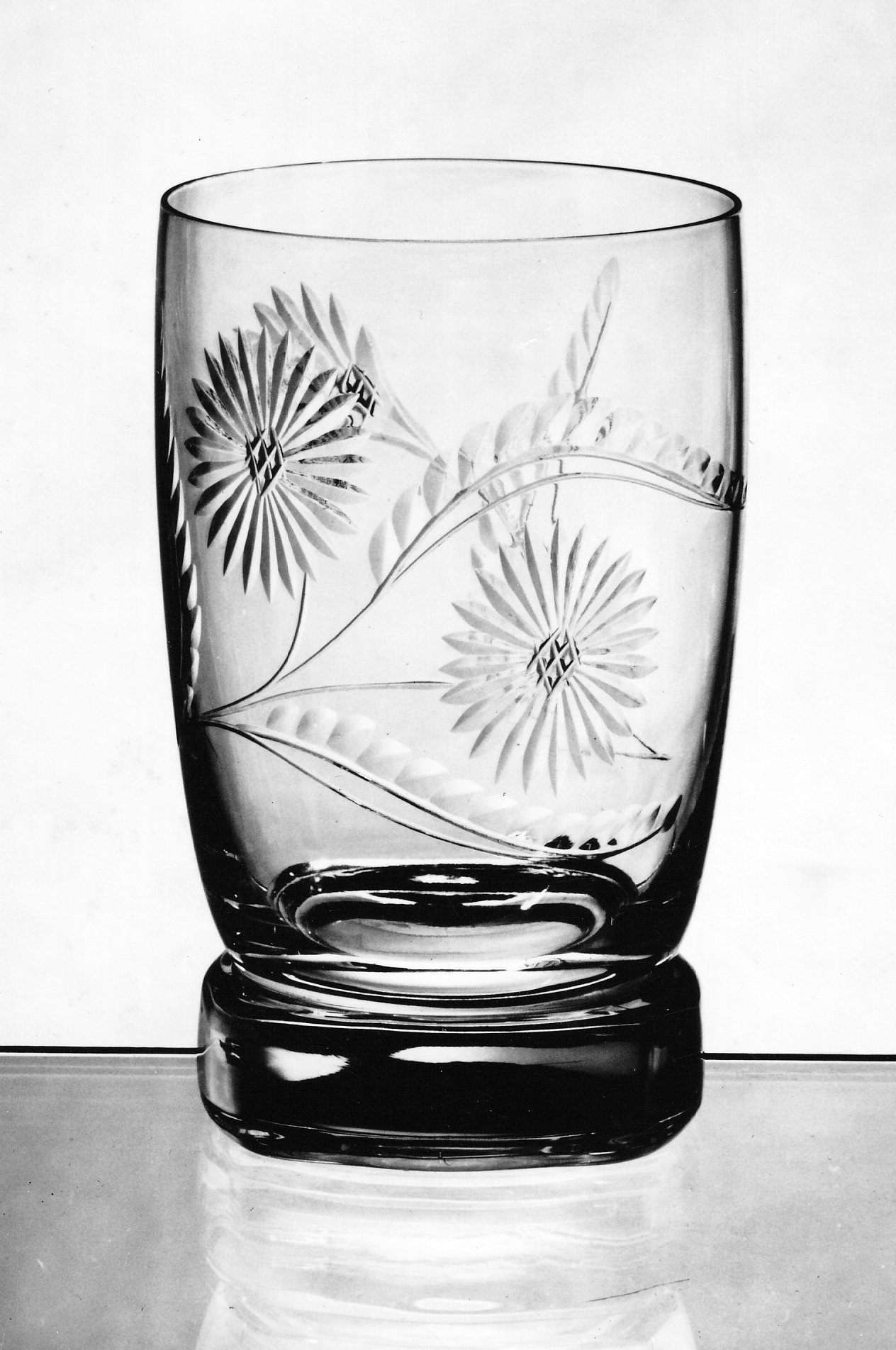
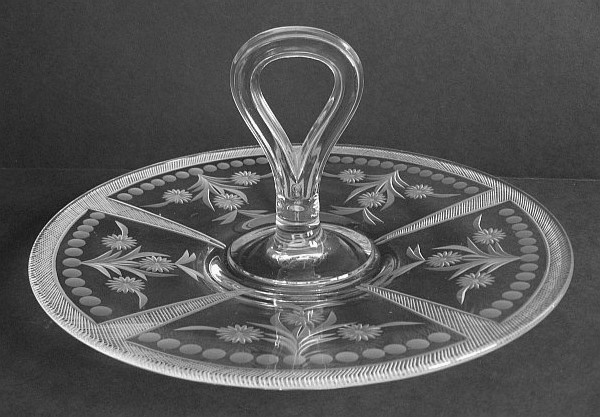
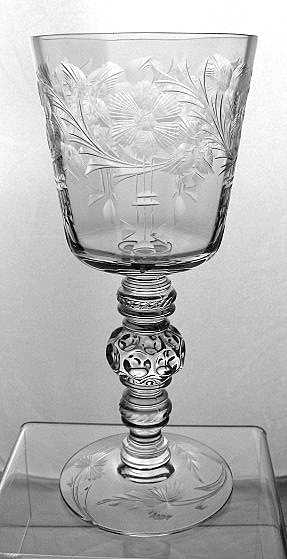
Cuttings embellished Heisey’s glassware, especially the company’s stemware, for much of the company’s history. Heisey opened its cutting shop in about 1915 and continued to decorate its glassware with cuttings until the company closed its doors in 1957.
Cuttings are decorations made on glass using stone or metal wheels or disks to cut a design into the glass. Cut designs are typically made up of forms such as miters, grooves, punties, and simple lines that can be combined to produce a complex design. After the work of cutting is completed, the design may be left as it came from the cutting wheel. This style of cutting is called a “gray cutting.” Uninformed collectors and sellers often confuse gray cuttings with etchings, but the two types of decorations are entirely different. To see the difference, compare the photos of gray cuttings accompanying this article with the photos accompanying the article on etchings.
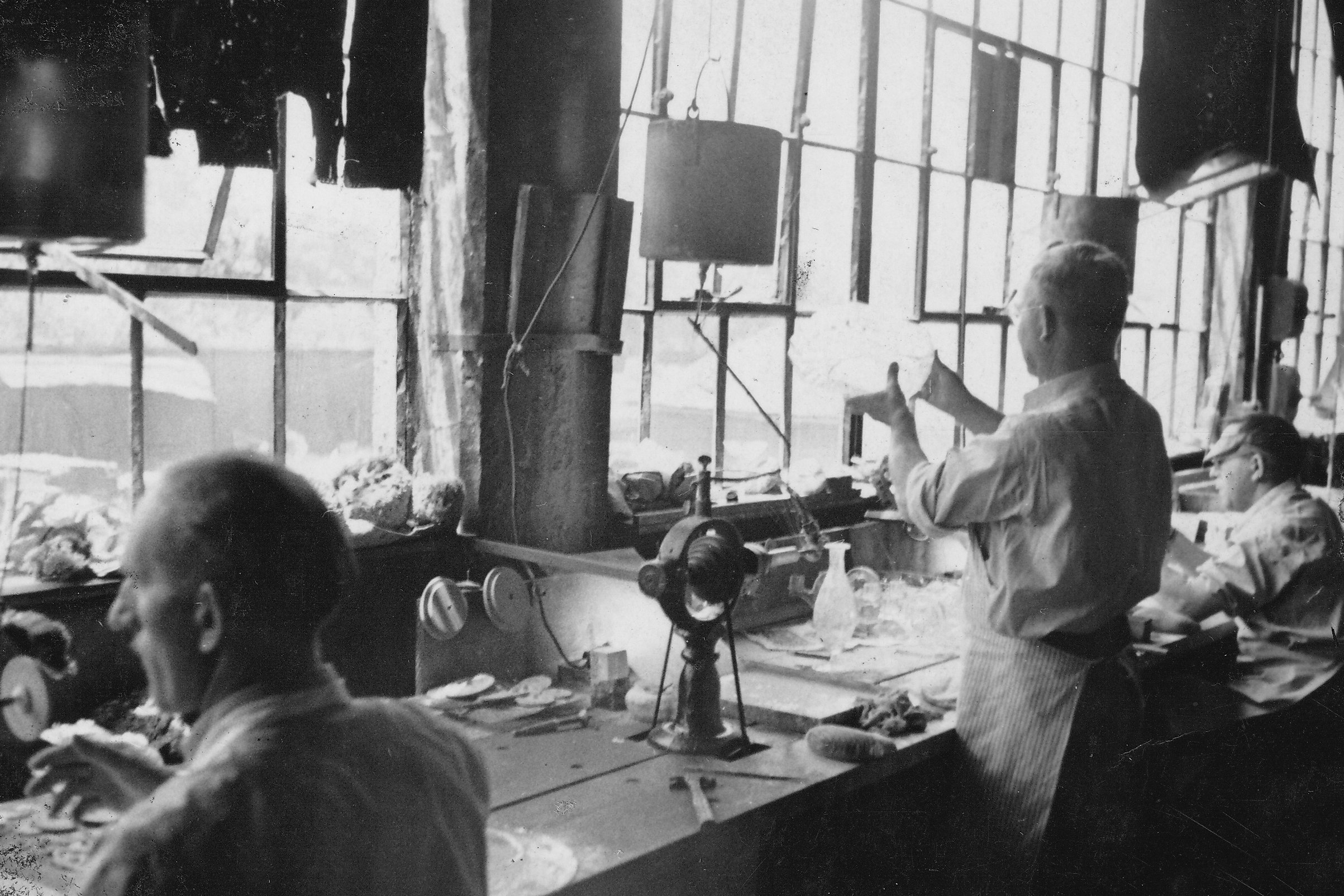
Cuttings may also be polished, either by hand or with acid, to produce a clear, transparent surface. Heisey called its polished cuttings “rock crystal cuttings.” Some Heisey cuttings include both gray and hand-polished elements.
Heisey referred to some of its cuttings as engravings. Engravings are produced using copper tools and different techniques from those used to produce cuttings. Many of the elaborate works of Emil Krall, Max Seidel, and others are engravings.
Many of Heisey’s first cuttings appear on baskets, which were introduced in 1916, shortly after Heisey established its cutting department. Most of these early cuttings are of leaves or simple geometric designs.
Between 1916 and 1924, Heisey introduced over 100 cuttings. No longer limited to baskets, these cuttings appeared on all types of pressed and blown ware. The cuttings of this period were gray cuttings, often with polished highlights. The most common designs were floral, featuring daisies, daffodils, magnolias, azaleas, cornflowers, and unnamed generic flowers. Other designs were geometric, featuring stars and polished oval medallions, among other motifs.
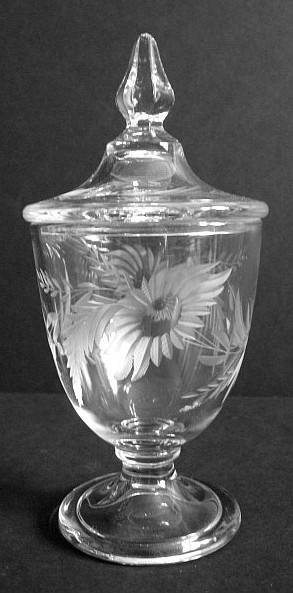
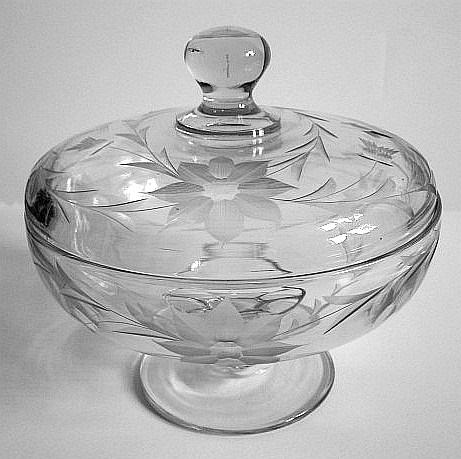
The two most popular cuttings of the period were No. 679 Windsor (1919-c.1926) and No. 693 Cloister (1919-c.1926). Both are gray cuttings with polished highlights. Both were available on more than 60 patterns, often on multiple items in a pattern. Today, collectors can find examples of these cuttings on stemware, plates, tumblers, pitchers, salt and pepper shakers, cologne bottles, syrup pitchers, candy jars, candlesticks, vases, and many other items.
With its labor-intensive design, the most expensive Heisey cutting of the period was No. 706 Warrick (1921-1924). One hundred years ago, Heisey’s price for a dozen goblets with this cutting was $61.80, compared to $15-30 per dozen for goblets with simpler cuttings.
After a brief closure in the late 1920s, Heisey re-opened its cutting department in 1932. In the same year, the company hired master cutter and engraver Emil Krall as the head designer for the cutting department. In this capacity and, later, as head of the cutting department, Krall designed more than 100 production cuttings.
Reflecting changing tastes, most of the cuttings introduced during this decade were highly polished “rock crystal” cuttings. Floral and geometric designs continued to be popular, along with Art Deco-inspired cuttings such as Nos. 825 Sea Glade (1934-1936), 826 Venus (1934-1935), and 847 Streamline (1935). The No. 865 Florentine engraving (1935-1943) was designed by Emil Krall to be an affordable alternative to more elaborate – and expensive – engravings.
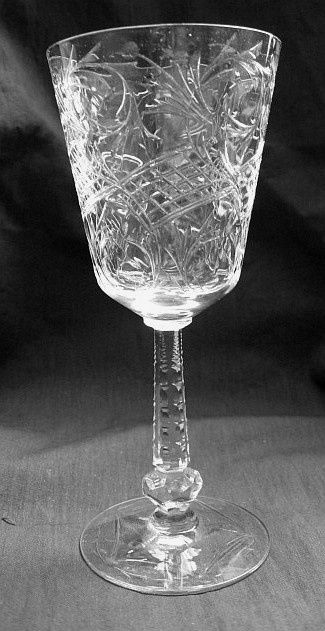
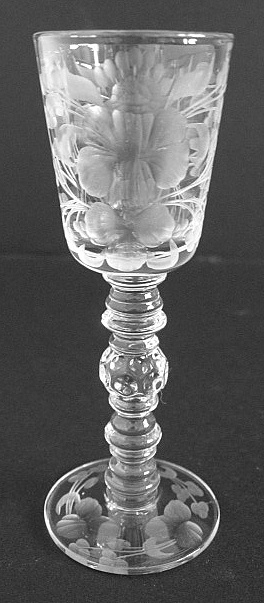
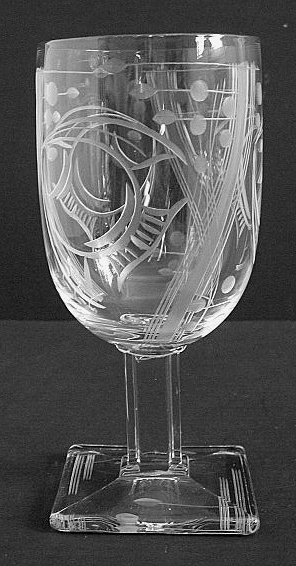
Most of the stemware patterns of this period were offered with at least one cutting. The sparkling “rock crystal” cuttings of the period can also be found on a wide variety of pressed and blown wares, including floral bowls, candlesticks, comports, ash trays, cream and sugar sets, and serving trays, among many others.
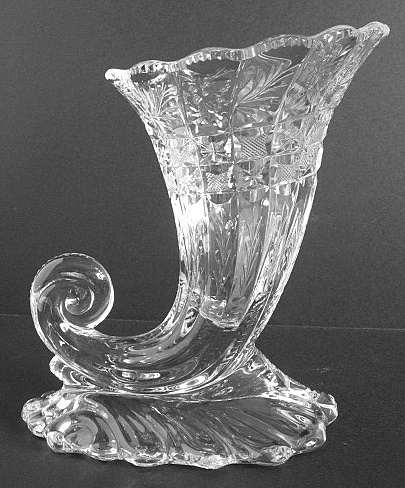
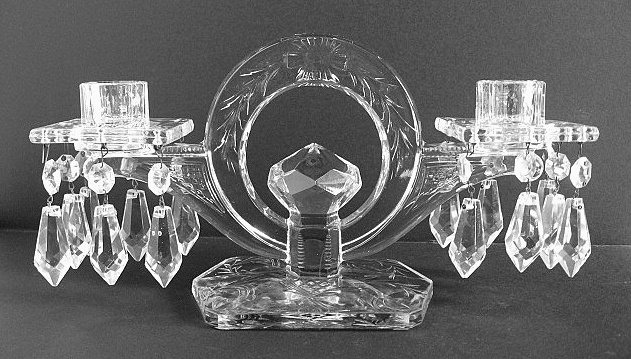
During his tenure at Heisey, Krall also created elaborate engravings for special orders and presentation pieces. Many of these works of art are on display at the Heisey Glass Museum, along with the Krall Cabinet, a display cabinet with a glass surround decorated with engravings by Krall.
Krall left Heisey in the early 1940s and established his own cutting studio. He continued to execute his designs on Heisey glass, and examples of Heisey patterns from the 1940s and ’50s can be found with beautiful engravings by Krall, often featuring a “Bird of Paradise” motif.
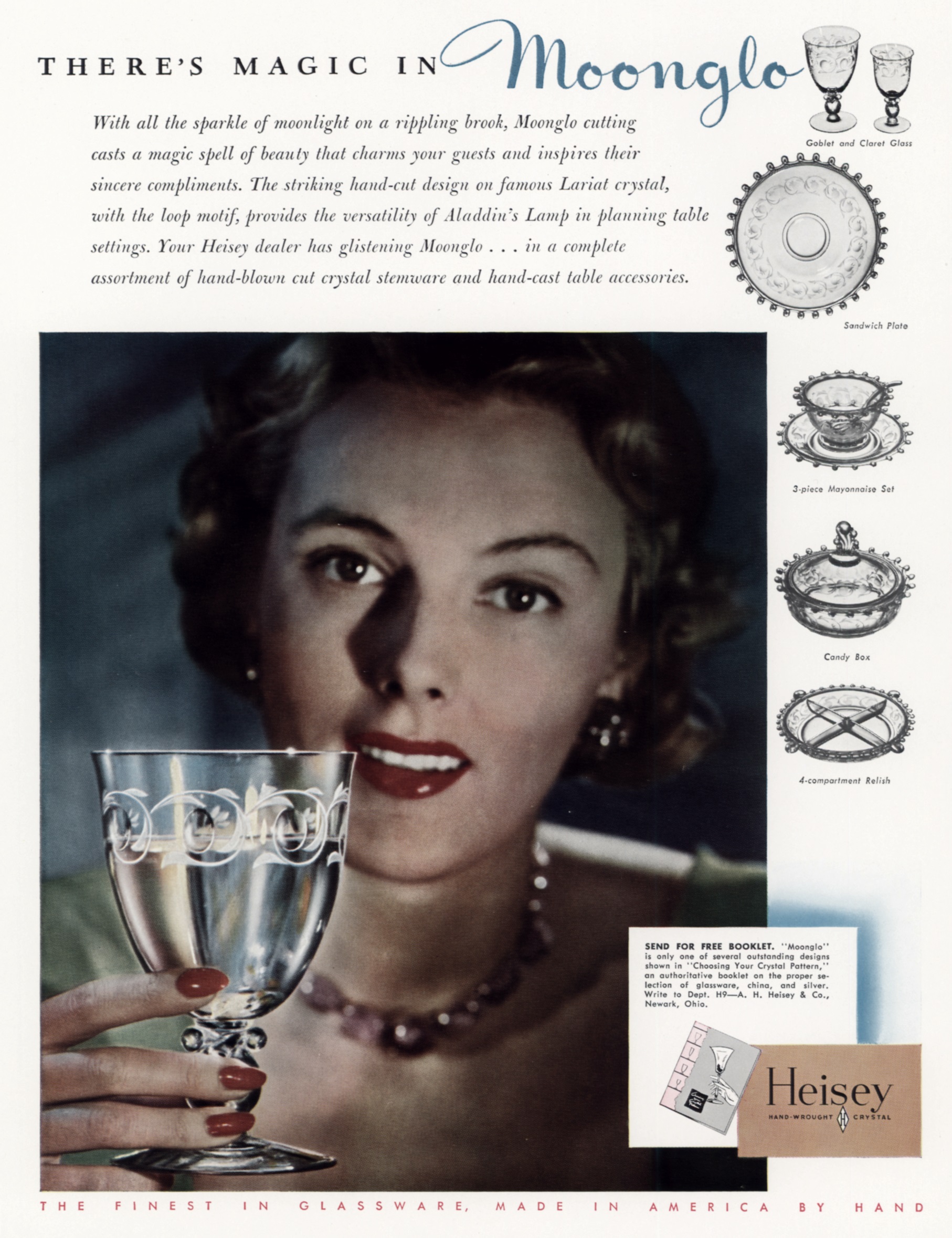
During the World War II years, Heisey struggled to produce blown ware and cuttings because of the lack of skilled workers. In spite of these difficulties, three popular cuttings were designed and introduced during the war years: Nos. 964 Maryland (1941-1957), 965 Narcissus (1941-1957), and 980 Moonglo (1942-1946). The Moonglo cutting appeared on many items in the popular No. 1540 Lariat pattern, and Narcissus was cut on another popular pattern of the period, No. 1519 Waverly. Many other cuttings from this period were produced for a limited period of time and are difficult to find today.
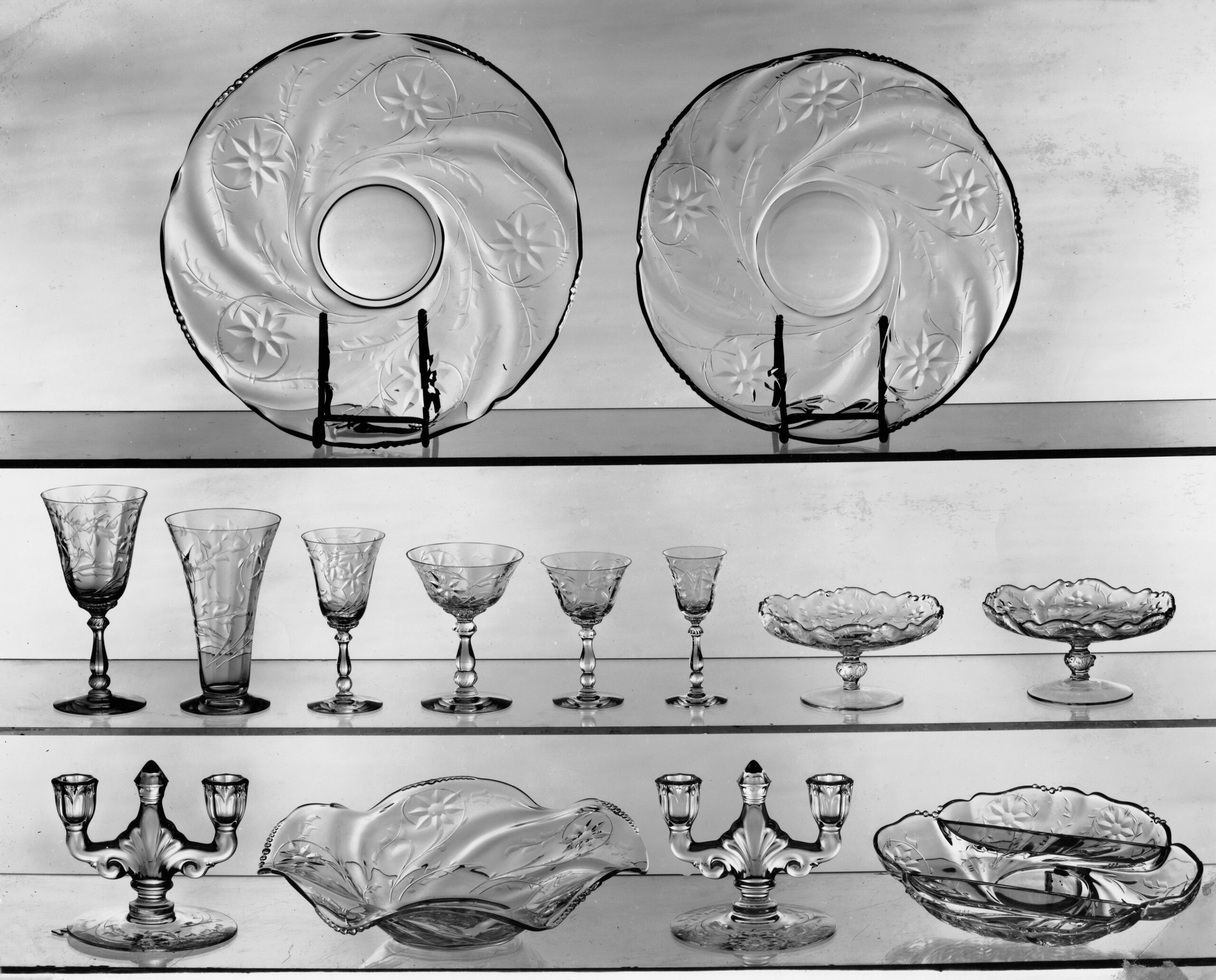
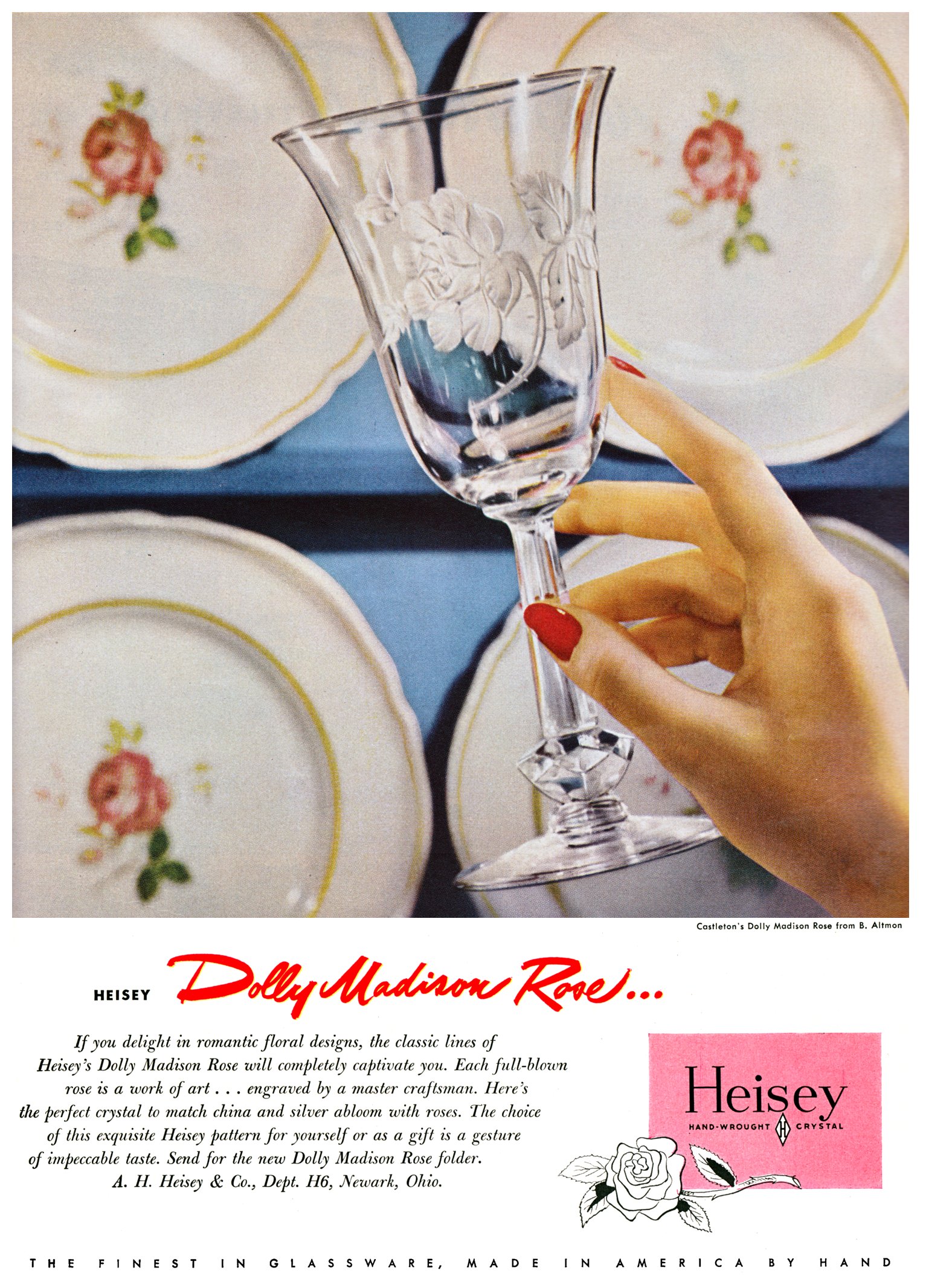
When the cutting department became more active in the postwar period, many new cuttings were introduced between 1949 and 1952. Most of them appear on stemware lines, some of which were designed to accompany china patterns. One of the more popular cuttings of this period is the No. 1015 Dolly Madison Rose engraving (1949-1956), which is still popular with collectors today. It was made to match the “Dolly Madison” pattern of the Castleton China company.
In the company’s final years, Heisey continued to design and introduce cuttings, primarily for new stemware lines. Heisey’s last cuttings were introduced in early 1956 for the Nos. 1E92 Omega and 6010 Finesse stemware patterns. A total of 12 cuttings were designed for the Omega line alone.
Heisey’s cuttings were done almost exclusively on Crystal glass. A few items in Flamingo and Moongleam are known with the Windsor cutting, but they are the exception.
Many of the cuttings found on Heisey glass were not done at the Heisey factory, but by the many cutting companies that bought glass from Heisey. A list of such companies for a single year, 1916, includes more than 60 cutting companies. One such company was the Lewis and Neblett Company of Cincinnati, Ohio. They added attractive cuttings to Heisey pieces and advertised that they bought glass only from Heisey because of its high quality. Cuttings by Pairpoint and Hawkes can also be found on Heisey glass. Unfortunately for today’s collectors, catalogs and other records of many cutting companies have not survived, and many cuttings on Heisey by other companies cannot be identified.